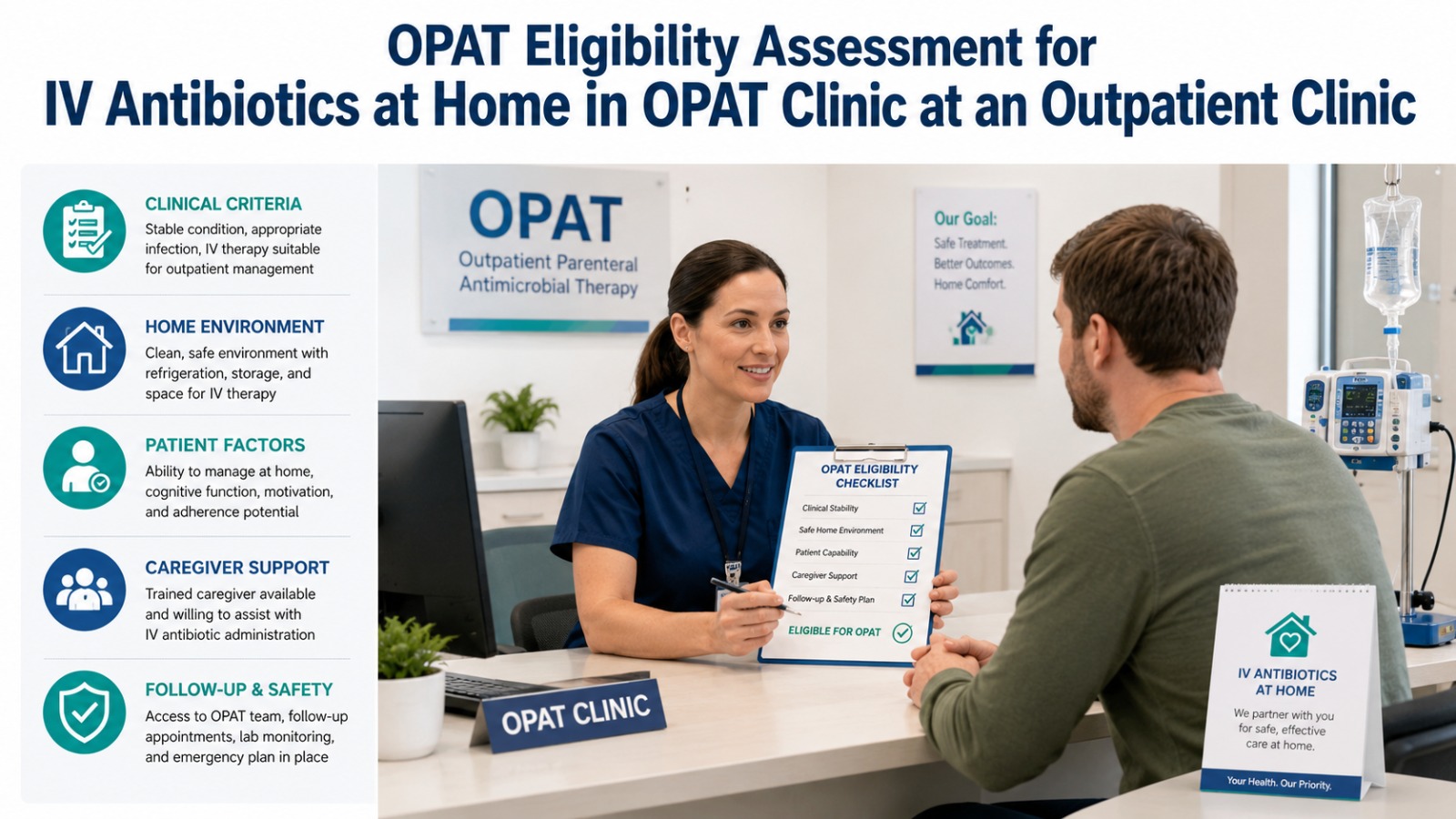
When people search for opat eligibility assessment for iv antibiotics at home in opat clinic page summary in two minutes outpatient clinic patient guide, they are usually trying to turn a confusing clinic letter, symptom, or follow-up plan into something actionable. Page Summary in Two Minutes: OPAT Eligibility Assessment for IV Antibiotics at Home in OPAT Clinic at an Outpatient Clinic is written for patients and carers who want plain-language clarity before they walk through the clinic door — or after they leave with homework to complete.
This article explains how outpatient clinics usually think about risk, how they choose sensible tests, and how follow-up is meant to keep you safe between visits. It is educational, not a substitute for personalised medical advice. Bring your own history, medications, and questions so your clinician can tailor the plan to you.
The layout follows a simple blog structure: four main sections with headings, then a conclusion and five FAQs. You can read start-to-finish or jump to the section that matches what you need today.
What this topic is (and common misunderstandings)
Communication quality changes outcomes for opat eligibility assessment for iv antibiotics at home in opat clinic page summary in two minutes outpatient clinic patient guide. If you need more time, ask early in the visit. If you need an interpreter, request one when booking. If you learn best visually, ask for a diagram or printed summary. If you are hard of hearing, ask to sit closer and request written instructions. These adjustments are normal — clinics are used to providing them when asked.
Focused examination for opat eligibility assessment for iv antibiotics at home in opat clinic page summary in two minutes outpatient clinic patient guide is meant to answer a short list of questions raised by your history. Depending on the topic, that might mean blood pressure and pulse, heart and lung listening, abdominal palpation, a focused neurological check, joint assessment, skin inspection, or a brief mental health review. The goal is not “everything” — it is the smallest set of findings that changes the plan safely.
Referral does not mean your clinic failed — it means the question needs specialist tools, higher-risk monitoring, or a procedure you cannot have in primary care. A strong referral letter summarises the timeline, key results, what has been tried, and the exact question for the specialist. You can help by keeping copies of results and a single up-to-date medication list.
Red flags: when same-day clinic contact or emergency care is appropriate
A simple home log helps page summary in two minutes care stay consistent: symptom scores, peak flow, glucose readings, blood pressure morning and evening, sleep hours, headache frequency, or a short daily mood note. Bring the log to follow-up — it reduces recall bias and speeds decisions.
Treatment decisions for opat eligibility assessment for iv antibiotics at home in opat clinic page summary in two minutes outpatient clinic patient guide weigh benefits, side effects, interactions, pregnancy status, kidney and liver function, and your ability to stick with a plan. That is why two people with a similar label on a chart can still receive different prescriptions. A good clinic explains trade-offs plainly and writes down the plan when it gets complicated (new medicines, tapers, procedures, or monitoring schedules).
How a clinic evaluates it: history, checks, and targeted tests
For topics like opat eligibility assessment for iv antibiotics at home in opat clinic page summary in two minutes outpatient clinic patient guide, the clinic visit starts with a story: when it began, how it changed, what you already tried, and what you want fixed first. That narrative is not “small talk” — it is clinical data. The more specific you are about timing, severity, and context (work, pregnancy, sport, caring duties), the easier it is for the team to choose the right checks and avoid the wrong ones.
Tests for opat eligibility assessment for iv antibiotics at home in opat clinic page summary in two minutes outpatient clinic patient guide should change management. If a result would not change what you do today, the clinic may defer it, repeat it at a better time, or skip it entirely. When patients understand that principle, shared decision-making becomes easier — especially for repeat bloods, imaging, and screening tests that can create incidental findings or anxiety.
Communication quality changes outcomes for opat eligibility assessment for iv antibiotics at home in opat clinic page summary in two minutes outpatient clinic patient guide. If you need more time, ask early in the visit. If you need an interpreter, request one when booking. If you learn best visually, ask for a diagram or printed summary. If you are hard of hearing, ask to sit closer and request written instructions. These adjustments are normal — clinics are used to providing them when asked.
Home tracking: simple logs that make follow-up appointments easier
If you are preparing for page summary in two minutes, pack a one-page timeline (dates matter), your medication list including over-the-counter items, and photos of rashes or swelling in good lighting if relevant. For blood-pressure or diabetes topics, bring home readings. For pain or dizziness, note triggers and what you were doing when symptoms peaked.
Prevention is often the best long-term outcome for opat eligibility assessment for iv antibiotics at home in opat clinic page summary in two minutes outpatient clinic patient guide. That can mean vaccines, safer activity pacing, trigger avoidance, dietary patterns that support your condition, smoking reduction, alcohol moderation, sleep routines, and simple home monitoring. Prevention is less dramatic than emergency care, but it prevents more harm over a lifetime than almost anything else outpatient clinics do.
Treatment and self-care: first steps and when plans escalate
Focused examination for opat eligibility assessment for iv antibiotics at home in opat clinic page summary in two minutes outpatient clinic patient guide is meant to answer a short list of questions raised by your history. Depending on the topic, that might mean blood pressure and pulse, heart and lung listening, abdominal palpation, a focused neurological check, joint assessment, skin inspection, or a brief mental health review. The goal is not “everything” — it is the smallest set of findings that changes the plan safely.
Treatment decisions for opat eligibility assessment for iv antibiotics at home in opat clinic page summary in two minutes outpatient clinic patient guide weigh benefits, side effects, interactions, pregnancy status, kidney and liver function, and your ability to stick with a plan. That is why two people with a similar label on a chart can still receive different prescriptions. A good clinic explains trade-offs plainly and writes down the plan when it gets complicated (new medicines, tapers, procedures, or monitoring schedules).
For topics like opat eligibility assessment for iv antibiotics at home in opat clinic page summary in two minutes outpatient clinic patient guide, the clinic visit starts with a story: when it began, how it changed, what you already tried, and what you want fixed first. That narrative is not “small talk” — it is clinical data. The more specific you are about timing, severity, and context (work, pregnancy, sport, caring duties), the easier it is for the team to choose the right checks and avoid the wrong ones.
Care coordination: pharmacies, labs, portals, and missed-call loops
During the consultation about page summary in two minutes, ask: What is the working plan today? What should I monitor at home? When is my follow-up? What side effects should I report early? If tests are ordered, ask how results will reach you and what to do if you hear nothing by the expected date.
Referral does not mean your clinic failed — it means the question needs specialist tools, higher-risk monitoring, or a procedure you cannot have in primary care. A strong referral letter summarises the timeline, key results, what has been tried, and the exact question for the specialist. You can help by keeping copies of results and a single up-to-date medication list.
Follow-up: monitoring, prevention, and earlier return if needed
Tests for opat eligibility assessment for iv antibiotics at home in opat clinic page summary in two minutes outpatient clinic patient guide should change management. If a result would not change what you do today, the clinic may defer it, repeat it at a better time, or skip it entirely. When patients understand that principle, shared decision-making becomes easier — especially for repeat bloods, imaging, and screening tests that can create incidental findings or anxiety.
Prevention is often the best long-term outcome for opat eligibility assessment for iv antibiotics at home in opat clinic page summary in two minutes outpatient clinic patient guide. That can mean vaccines, safer activity pacing, trigger avoidance, dietary patterns that support your condition, smoking reduction, alcohol moderation, sleep routines, and simple home monitoring. Prevention is less dramatic than emergency care, but it prevents more harm over a lifetime than almost anything else outpatient clinics do.
Focused examination for opat eligibility assessment for iv antibiotics at home in opat clinic page summary in two minutes outpatient clinic patient guide is meant to answer a short list of questions raised by your history. Depending on the topic, that might mean blood pressure and pulse, heart and lung listening, abdominal palpation, a focused neurological check, joint assessment, skin inspection, or a brief mental health review. The goal is not “everything” — it is the smallest set of findings that changes the plan safely.
What to bring: results, photos, timelines, and medication lists
Between visits for page summary in two minutes, seek urgent help for severe chest pain, sudden breathlessness, fainting, signs of stroke, severe allergic reactions, vomiting blood or black stools, severe dehydration, confusion with fever, or rapidly worsening pain. If you are unsure, use a nurse advice line or urgent care route rather than guessing.
Communication quality changes outcomes for opat eligibility assessment for iv antibiotics at home in opat clinic page summary in two minutes outpatient clinic patient guide. If you need more time, ask early in the visit. If you need an interpreter, request one when booking. If you learn best visually, ask for a diagram or printed summary. If you are hard of hearing, ask to sit closer and request written instructions. These adjustments are normal — clinics are used to providing them when asked.
Conclusion
Outpatient clinics are built for exactly this kind of topic: clarifying opat eligibility assessment for iv antibiotics at home in opat clinic page summary in two minutes outpatient clinic patient guide, reducing avoidable harm, and connecting you to the right level of care when complexity rises. Page Summary in Two Minutes: OPAT Eligibility Assessment for IV Antibiotics at Home in OPAT Clinic at an Outpatient Clinic becomes less stressful when the steps are transparent — what is being ruled out, what is being treated now, and what will be watched over time.
Use the FAQs below as a final checklist, then attend your visit with confidence. Clear communication and consistent follow-up beat “perfect knowledge from the internet” every time — because your clinician can integrate your exam findings, your history, and your local resources into a plan that fits you.
Frequently Asked Questions
Q1. Is it normal to feel nervous about tests or procedures?
A: Yes. Ask what pain relief is available, how long the test takes, what normal after-effects are, and what should prompt urgent contact. Many clinics provide written aftercare — request it if it is not offered automatically.
Q2. What if my symptoms do not match the “classic” description of page summary in two minutes?
A: Medicine is probabilistic: not everyone fits textbook patterns. If symptoms are atypical but persistent, ask what diagnoses are being considered, what checks rule out serious causes, and what the follow-up plan is if things evolve. A watchful plan should still include safety-netting.
Q3. How do I get a copy of my clinic letter for another doctor?
A: Request it at reception or through your patient portal. Many systems allow you to share records electronically. If you need paper copies for work or insurance, ask what the process and timeframe is — and whether any fees apply.
Q4. What should I do if I disagree with the clinic plan?
A: Ask for the reasoning first — sometimes the explanation resolves the concern. If you still disagree, you can request a second opinion, ask for a repeat visit with a different clinician within the same practice, or ask for referral to a specialist.
Q5. How can I reduce medication errors after a clinic visit?
A: Use one master medication list, update it after every change, bring it to every appointment, and reconcile it after discharge paperwork. Ask your pharmacist to review new prescriptions, especially if you take medicines that affect kidneys, blood pressure, or blood thinning.
